Source handmade eco friendly neck tie for business, weddings, and events
Find 30 options for handmade eco friendly neck tie featuring silk, polyester, and cotton blends. Buyers can compare custom designs, tipping styles, and dimensions from verified Chinese manufacturers offering flexible MOQs.
Key considerations
Products List









Comprehensive Sourcing Guide
Strategic Sourcing Guide for Handmade Eco-Friendly Neckties
Navigating the global market for handmade eco-friendly neckties requires a disciplined approach that balances aesthetic requirements with rigorous supply chain verification. Buyers seeking products that align with sustainability goals while maintaining high craftsmanship standards must look beyond marketing labels. The procurement process involves a deep dive into material composition, production methodologies, and specific technical specifications that define the final product. This guide outlines the essential factors for sourcing these accessories, ensuring that the selected suppliers can deliver on the promise of quality and environmental responsibility without relying on unverified claims.
Material Composition and Fiber Selection
The foundation of any eco-friendly necktie lies in the raw materials used. In the current market, the primary fiber options observed for necktie production include 100% Silk, Polyester, and blends such as Polyester/Cotton. For a buyer prioritizing "eco-friendly" attributes, the distinction between natural and synthetic fibers is critical. While 100% Silk is a traditional, biodegradable luxury material often associated with high-end handmade goods, Polyester is a synthetic polymer that requires specific verification to be considered sustainable, often relying on recycled content claims.
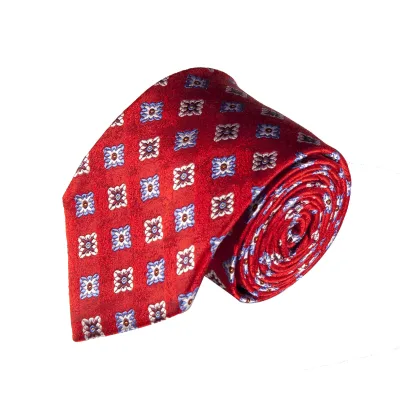
The supply data indicates that fabrics can vary significantly between listings. Some products specify "Silk or Polyester" as the fabric type, while others list "Polyester" exclusively or "Polyester/Cotton" blends. When evaluating a supplier for eco-friendly neckties, the buyer must explicitly request the fiber composition certificate. If the product is marketed as eco-friendly, the presence of 100% Silk or a certified organic cotton blend is a strong indicator of natural origin. However, if Polyester is the chosen material, the buyer must verify if it is made from recycled sources, as virgin polyester is derived from petroleum. The "Dobby" and "Jacquard" patterns observed in the product data suggest complex weaving techniques that can be applied to both natural and synthetic fibers, meaning the pattern type alone does not confirm the material's environmental profile.
Furthermore, the interlining material plays a significant role in the tie's structure and sustainability. The observed data lists "Soft Double Brushed Polyester Interlining" or "Wool" as available options. Wool is a natural, renewable fiber that often aligns better with eco-friendly narratives than polyester interlining, provided it is sourced responsibly. Buyers should prioritize suppliers who offer wool interlining or clearly disclose the environmental credentials of their synthetic alternatives.
Technical Specifications and Dimensional Standards
Precision in manufacturing is a hallmark of quality neckties, and the technical specifications provided in the market data reveal a wide range of dimensional standards. Unlike mass-produced items with rigid uniformity, handmade and custom neckties often adhere to specific length and width ratios that cater to different styles and customer requests. The observed product standards include a variety of dimensions: 45cm length by 6cm width, 60cm length by 7cm width, and longer variants such as 148cm length by 6cm, 7cm, or 8cm width. Additionally, a standard of 9*145cm and a length range of 142cm-150cm with a size of 6-9cm are noted.
These variations indicate that "one size fits all" is not the standard for this category. When sourcing, buyers must define the target market's preference for tie dimensions. A 45cm tie is significantly shorter than the 148cm variants, which may be intended for specific cultural styles or decorative purposes. The "Decoration Necktie" usage category suggests that some products may not be intended for formal wear but rather for aesthetic display, which influences the required tolerance levels for length and width.
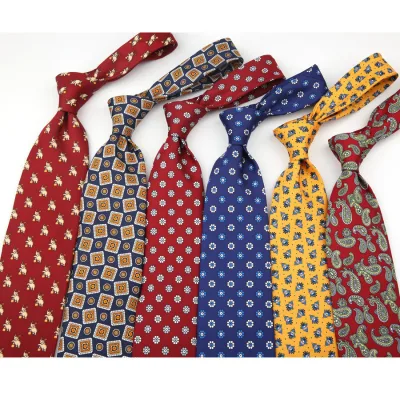
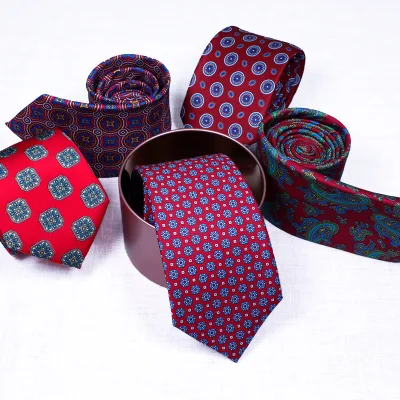
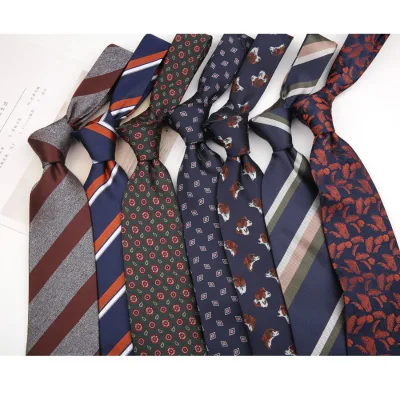
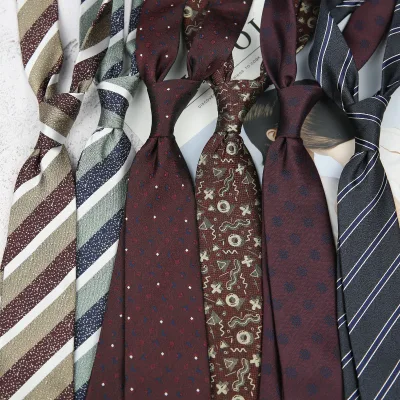
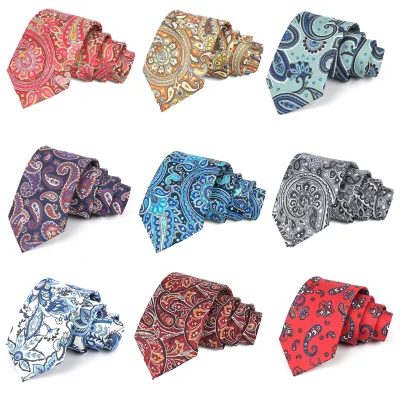
The "Tack" specification, noted as "Thick or Thin as Customer Request," further highlights the customizability of the product. This attribute affects the drape and stiffness of the tie. For a handmade product, the ability to control the tack thickness is a key differentiator. Buyers should verify the supplier's capability to maintain consistency in these custom dimensions, as manual production can introduce slight variances. The "Style" attributes, including "Printed," "Plain Dyed," "Casual," and "Striped," also dictate the technical requirements for the weaving and dyeing processes, which must be aligned with the eco-friendly material constraints.
Customization Capabilities and Design Flexibility
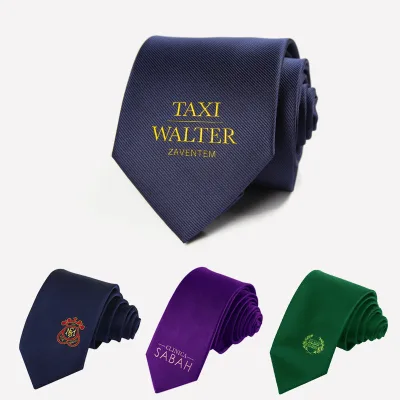
A significant advantage of sourcing handmade neckties is the high degree of customization available. The market data confirms that "Customization" is available, with specific attributes such as "Customized Designs Accepted" and "Custom Logo Accepted." This flexibility allows brands to create unique products that stand out in a crowded marketplace. The "Tipping" options, which can be "Plain" or feature a "Custom Logo," offer an additional layer of branding opportunity on the reverse side of the tie.
The production models listed, such as "ZIPPER-A," "03," "5234," "4477," "2708," "CHR02," "1006-5," "hsld0422," and "0926-8," suggest a vast array of SKUs that can be adapted. However, the presence of specific model numbers does not imply that every model supports every customization. Buyers must confirm that the specific design they intend to produce is compatible with the chosen material and interlining. For instance, a complex "Jacquard" pattern may require a different setup than a "Plain Dyed" style, impacting the lead time and minimum order quantity (MOQ).
The data also notes a "Brand Name: Sean" and a "Place of Origin: Hebei, China," indicating that some suppliers operate with established brand identities. While this does not preclude private labeling, it suggests that the supply chain is structured to handle branded orders. The "Design" and "Logo" acceptance policies are crucial for buyers looking to create a cohesive brand identity. It is essential to verify the file formats and resolution requirements for custom logos to ensure high-quality printing or weaving results.
Cost Drivers and Minimum Order Quantities
Understanding the cost structure of handmade neckties is vital for budgeting and pricing strategy. The observed price range in the market is 0.5 to 30 USD, a wide spectrum that reflects the diversity in materials, complexity, and production volume. The lower end of the range likely corresponds to mass-produced polyester options, while the higher end may reflect 100% silk, complex jacquard weaves, or extensive customization.
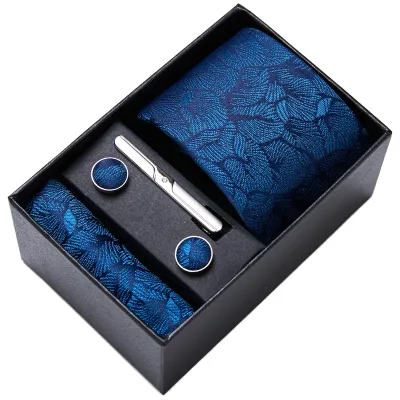
The Minimum Order Quantity (MOQ) is another critical cost driver. The observed MOQ range is 1 to 100 units, with a specific note of "10 Pcs" for certain items. This low MOQ flexibility is particularly beneficial for startups or brands testing new designs. However, buyers must be aware that lower MOQs often come with a higher unit cost due to the setup time required for handmade production. The "Packing" specifications, such as "Each Inside a Polybag, 200-300 PCS Inside a Carton" or "1pcs/opp Bag," also influence the logistics cost. Bulk packing in cartons is generally more cost-effective for shipping, while individual polybagging adds to the labor cost but may be necessary for retail presentation.
When evaluating cost, buyers should consider the total landed cost, including shipping, duties, and the cost of custom tooling or setup. The "High Quality" attribute noted in the data suggests that premium pricing may be justified by superior craftsmanship, but this must be validated through sample testing rather than assumed.
Supplier Evaluation and Quality Control Protocols
Evaluating a supplier for handmade eco-friendly products requires a multi-faceted approach. The "Place of Origin" is listed as "China," specifically "Hebei, China," which is a known manufacturing hub. However, origin alone does not guarantee quality or sustainability. Buyers should request detailed information about the factory's working conditions, labor practices, and environmental management systems.
Quality control is paramount, especially for handmade items where consistency can vary. The "Quality: High Qualtiy" attribute is a self-reported claim and should be treated as an observation rather than a guarantee. Buyers must implement a robust quality control plan that includes pre-production sample approval, in-line inspections, and final random inspections. The "Standard" attribute mentioning "SGS" suggests that some suppliers may undergo third-party testing, but buyers should verify if this certification applies to the specific product batch or is a general company credential.
The "Tipping" and "Pattern" consistency are key areas to inspect. For example, a "Striped" pattern must align perfectly at the seams, and "Plain Dyed" fabrics must show no color bleeding. The "Interlining" should be securely attached and provide the desired structure without adding excessive bulk. Buyers should also verify the "Packing" integrity to ensure that the ties arrive without damage, especially given the delicate nature of silk and the potential for crushing in transit.
Compliance, Certification, and Long-Term Procurement
The term "eco-friendly" is often used loosely in the market, making compliance verification essential. While the data mentions "GOTS" in a low-confidence background section, it is not listed as a confirmed standard for the specific products. Therefore, buyers should not assume GOTS certification is present unless explicitly provided by the supplier. Instead, buyers should request specific documentation such as Oeko-Tex 100, GRS (Global Recycled Standard) for recycled polyester, or FSC certification for paper packaging.
The "Standard" attribute lists dimensions like "45cm length x 6cm width, or as customer request," which implies that the supplier is flexible but also that the standard is not universal. Buyers must ensure that the custom dimensions meet their specific market requirements and that the "Customer Request" process is clearly defined to avoid misunderstandings.
Long-term procurement considerations involve building a relationship with a supplier who can scale production while maintaining quality and sustainability standards. The "Customization" and "Design" capabilities suggest that the supplier is capable of evolving with the buyer's needs. However, buyers should establish clear communication channels and regular review cycles to ensure that the supplier continues to meet the evolving expectations of the eco-friendly market. The "Lead Time" and "MOQ" flexibility should be negotiated to align with the buyer's inventory strategy, ensuring that the supply chain remains agile and responsive to market trends.
Comparative Analysis of Product Attributes
To facilitate decision-making, the following table summarizes the key attributes observed in the market data, highlighting the variations that buyers must navigate.
| Attribute Category | Observed Options | Sourcing Consideration |
|---|---|---|
| Material | 100% Silk, Polyester, Polyester/Cotton | Verify fiber source for eco-claims; prefer natural or recycled. |
| Pattern | Jacquard, Dobby, Striped, Plain Dyed, Printed | Complex patterns may increase cost and lead time. |
| Dimensions | 45x6cm, 60x7cm, 148x6/7/8cm, 9x145cm | Define target market preference; custom requests available. |
| Interlining | Soft Double Brushed Polyester, Wool | Wool is generally more eco-friendly; verify source. |
| Tipping | Plain, Custom Logo, Navy, Black | Custom logos add branding value; verify print quality. |
| MOQ | 1 to 100 Pcs (specific 10 Pcs noted) | Low MOQs available but may have higher unit costs. |
| Packing | Polybag, Carton Box, 1pcs/opp Bag | Bulk packing reduces shipping costs; individual packing for retail. |
| Origin | China (Hebei) | Verify factory audits and labor standards. |
| Certifications | SGS (mentioned), GOTS (low confidence) | Request specific eco-certificates; do not assume. |
This comparative view underscores the importance of specificity in procurement. The wide range of options allows for tailored solutions but requires diligent verification to ensure that the final product meets the buyer's ethical and quality standards. By focusing on material transparency, dimensional precision, and robust supplier evaluation, buyers can successfully source handmade eco-friendly neckties that deliver value and align with their brand values.
FAQs
What materials are used for handmade eco friendly neck ties?
Materials include 100% Silk, Polyester, or Polyester/Cotton blends. Buyers must verify fiber composition certificates to confirm eco-friendly status, as virgin polyester lacks sustainability credentials unless recycled.
Can I request custom dimensions for handmade eco friendly neck ties?
Yes, custom dimensions are available such as 148cm length with varying widths. Suppliers offer standard sizes like 45cm by 6cm or 60cm by 7cm, but specific requests can be accommodated upon agreement.
What is the minimum order quantity for handmade eco friendly neck ties?
Minimum order quantities range from 1 to 100 units, with some items starting at 10 pieces. Lower MOQs often incur higher unit costs due to the setup time required for handmade production processes.
How are handmade eco friendly neck ties packaged for shipping?
Packaging options include individual polybags with 200 to 300 pieces per carton or individual OPP bags in carton boxes. Bulk packing reduces logistics costs while individual bagging aids retail presentation.
Which customization options are available for handmade eco friendly neck ties?
Customization includes designs, logos, and tipping styles like plain or custom logo. Interlining can be selected as soft double brushed polyester or wool, allowing for tailored structural and aesthetic outcomes.
What standards define the quality of handmade eco friendly neck ties?
Quality is often self-reported as high, with some suppliers noting SGS standards. Buyers should verify third-party testing for specific batches rather than relying solely on general company credentials or origin claims.